Journal of Transport Geography2026UNDER REVIEW
Multiple Transportation Mode-Based Utility i2SFCA for Estimating Potential Demand: A Case Study of Commercial Facilities
Jiho Kim, Kyusik Kim, Kyusang Kwon
Urban Researcher · Spatial Analyst
I analyze cities and regions with spatial data. My master's work measured how far people actually are from everyday services; I now study regional disparity at KRIHS.
0
Publications
0
Conference talks
0
Awards & honors
0
Best paper prizes
About
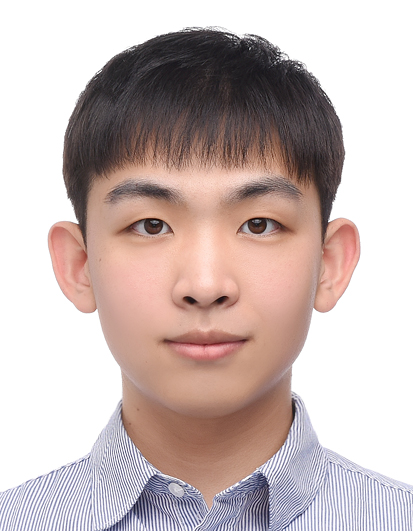
Jiho Kim
Korea Research Institute for Human Settlements
Sejong, South Korea
I completed my bachelor's and master's degrees in Urban Engineering at Chungbuk National University, where I have focused on understanding a wide range of issues emerging within urban and regional contexts. I am currently a researcher at the Korea Research Institute for Human Settlements, working on national balanced development.
My research interests lie in how population dynamics, spatial structure, urban functions, and public policies interact to produce uneven outcomes across cities and regions. I view phenomena such as disparities in living conditions, spatial concentration or exclusion of urban functions, and regional imbalance not as isolated problems, but as interconnected results of underlying urban structures.
To investigate these issues, I employ data-driven approaches using spatial statistics and GIS. I consider analytical tools not merely as techniques for measurement, but as means to better interpret the relationship between people and space. Through this approach, I aim to diagnose urban problems more precisely and contribute to policy-relevant insights toward more balanced and sustainable cities.
Research interests
2 funded research projects at Chungbuk National University
Selected research
Access to services, how people travel, and the uneven geography of both — 5 published, 1 under review.
Journal of Transport Geography2026UNDER REVIEW
Jiho Kim, Kyusik Kim, Kyusang Kwon
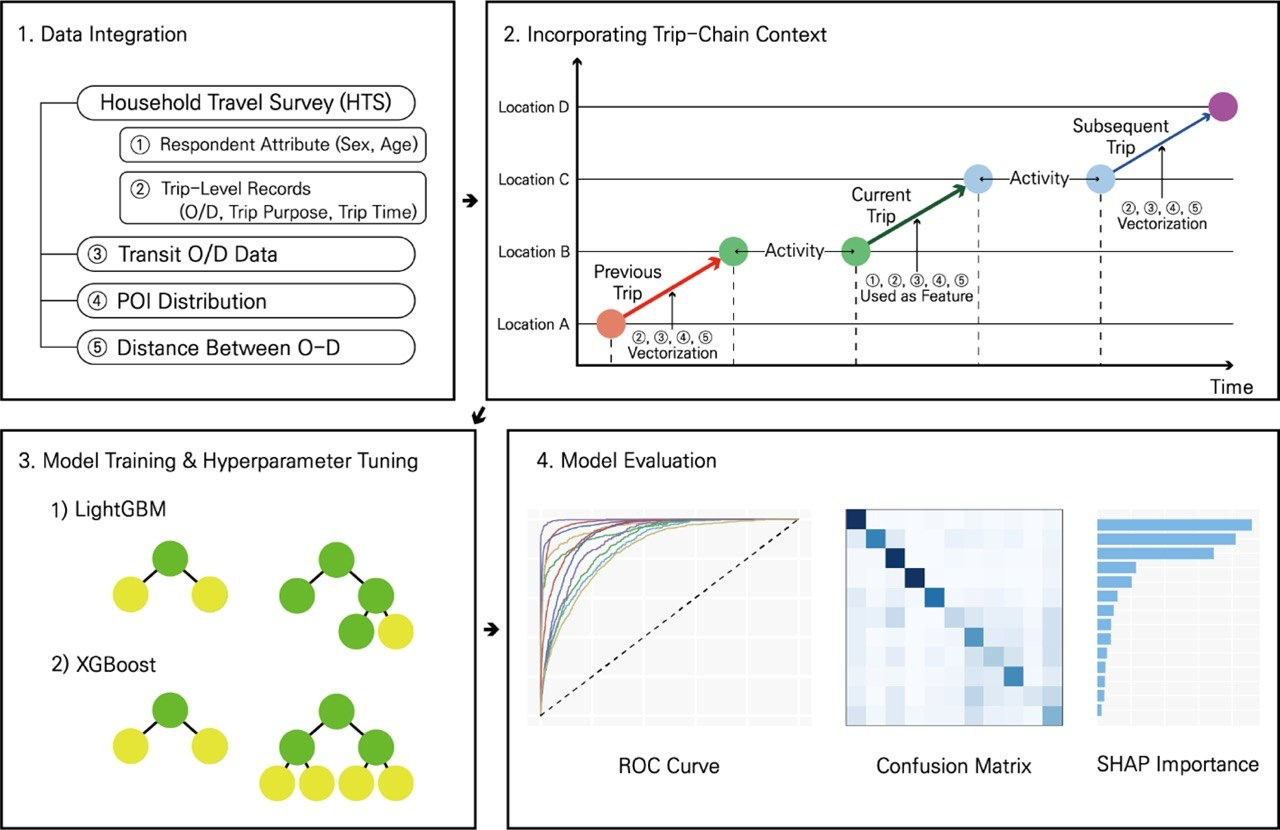
IET Intelligent Transport Systems, 20(1), e702132026
Jiho Kim, Jiwoo Kim, Kyusang Kwon
This study predicts trip purpose using minimal sequential context, the immediately preceding and following trips, instead of full daily trip chains. Using Seoul as a case study, it combines the 2021 Household Travel Survey (HTS), public transit OD data, and Kakao Map POI data in a multi-class XGBoost and LightGBM model. The model reaches about 71% overall accuracy and a weighted ROC-AUC of about 0.95 across eleven trip purposes. Ablation tests show that minimal sequential context explains most of the gain, while POI-based spatial indicators add only modest improvements. The approach offers a scalable, interpretable option for trip purpose prediction where data are limited.
Journal of Korean Planning Association2025
Kim, Jiho., Lee, B.K., Huh, D., Kwon, K.
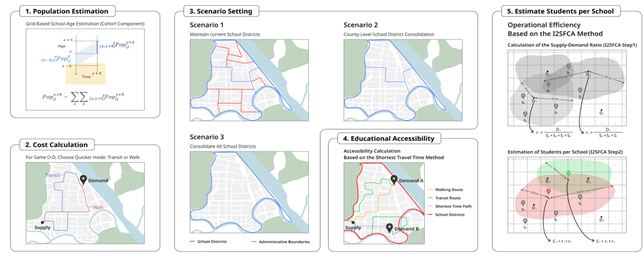
Amid the growing challenges of declining school-age populations and long-distance commuting, this study focuses on Muju, Jinan, and Jangsu counties in Jeollabuk-do, where school-age populations were projected at a 500 m grid level using the cohort-component method, and the Inverted Two-Step Floating Catchment Area (I2SFCA) method was applied to quantitatively assess how school district adjustments affect educational accessibility and school operational efficiency. The results show that integrating school districts beyond administrative boundaries increases the proportion of students able to commute within 30 minutes and reduces the number of schools at risk of closure, thereby improving both educational equity and sustainability. These findings provide an evidence-based policy alternative for improving rural educational environments.
Journal of the Korean Regional Science Association2025
Yoon, S., Jiho Kim, Seo, J., Kwon, K.
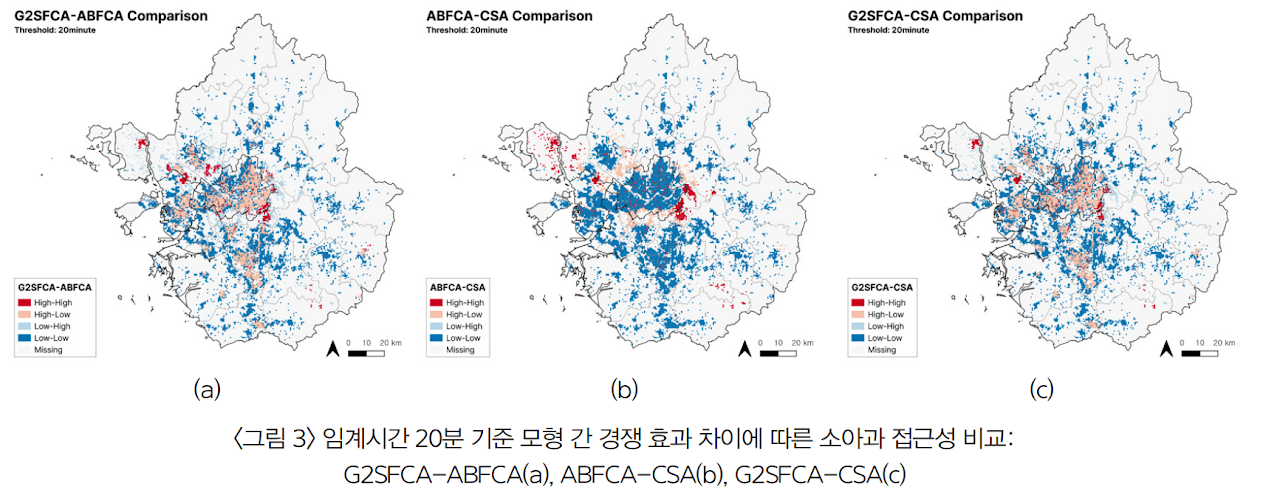
This study analyzes how spatial accessibility to pediatric care varies depending on the inclusion of demand, supply competition, and congestion effects. By comparing the G2SFCA, ABFCA, and CSA models, it demonstrates the importance of accounting for competitive effects to produce more realistic evaluations of healthcare accessibility.
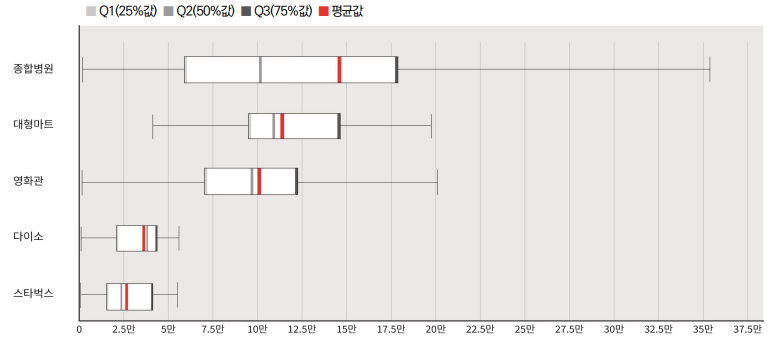
The Korea Spatial Planning Review2024
Jiho Kim, Kwon, K.
This study builds on the concept of effective population size defined in previous research and seeks to overcome its methodological limitations. To relax the unrealistic assumption that amenities are used only within administrative boundaries, we apply the Inverted Two-Step Floating Catchment Area (I2SFCA) method, incorporating inter-supplier competition and distance- (travel time-) decay in usage probability. The results indicate that convenience stores require an effective population size of 0.9–1.3 thousand people, while department stores require approximately 0.5–0.7 million people, with substantial regional variation, highlighting the need for place-specific policy and location strategies.
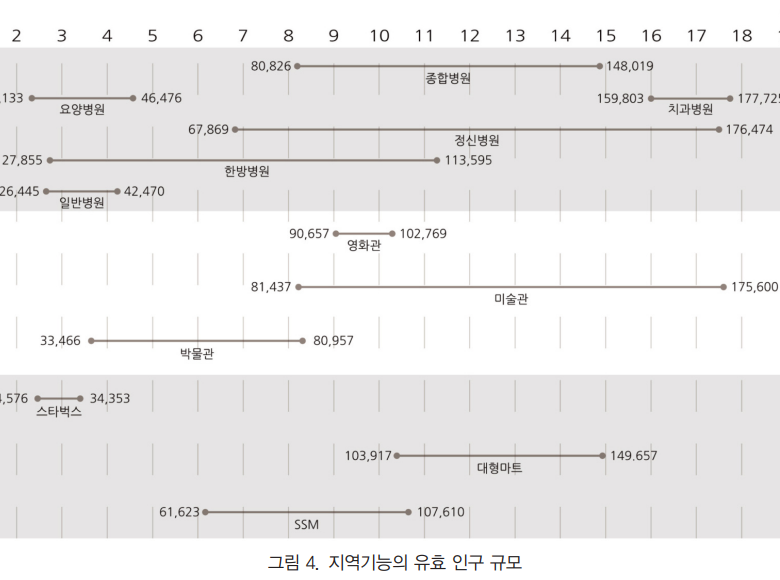
Journal of the Korean Urban Geographical Society2024
Jiho Kim, Seo, J., Kwon, K.
This study addresses the growing difficulty of maintaining urban amenities in small and medium-sized cities due to the concentration of functions in large metropolitan areas. It defines the minimum population required for stable operation of an urban function as the effective population size and estimates it using the population level per facility. The results show that convenience stores require about 1.4–1.6 thousand people, while department stores require about 0.38–0.50 million people, and that effective population size generally declines over time, with a much steeper decline in large cities, widening inter-urban functional disparities.
Background
2026.08present
National Balanced Development Research CenterSejong, South Korea
2024.032026.02
Thesis: Utility-based multiple transportation mode i2SFCA for estimating potential demand: A case study of commercial facilities
Advisor: Kyusang Kwon · Urban Economics and Spatial Analysis Lab
Lab LeaderUrban Economics and Spatial Analysis Lab2023.092026.02
2018.032024.02
Teaching AssistantData Mining2023.092023.12
Exchange StudentUniversity of Wolverhampton2023.012023.06
Research AssistantKorea Research Institute for Human Settlements (KRIHS)2021.072021.09
Military ServiceRepublic of Korea Army (Driver)2019.092022.03
Funded projects
Chungbuk National University
Tools
Programming — Python, R, Vibe Coding
GIS & Spatial — QGIS
Transportation — EMME 4, VISSIM
Design — SketchUp, Adobe Creative Suite, Figma
Recognition
Excellence Award (President of the Korean Association for Urban Regeneration Award)
2025 Urban Regeneration & Renewal Research Paper Competition2025
Best Paper Award
2025 Korean Regional Studies Association Fall Conference2025
Grand Prize
2024 Gyeongbuk Regional Development Data Visualization Contest2024
Grand Prize (Mayor of Busan Award)
2024 Urban Regeneration & Renewal Research Paper Competition2024
Encouragement Award
5th Summer BK21 Interdisciplinary Project Festival & Conference2024
Best Paper Award
2024 Summer Conference, Korean Association of Urban Geographers2024
Assessing Educational Equity Based on School Attendance Areas: Utilizing the Inverted Two-Step Floating Catchment Area (I2SFCA) Model
International International Conference of Asian-Pacific Planning Societies (ICAPPS)Seoul, Korea2024.08.23
An I2SFCA Approach to Estimating the Market Potential of Urban Amenities: The Case of Korea
International The 28th Pacific Conference of the Regional Science Association International (PRSCO)Daegu, Korea2024.08.06
Developing a Potential Demand Estimation Model for Urban Services through Multi-modal Utility-based Extension of the I2SFCA Approach
Fall Conference of the Korean Regional Association2025.12.12Best Paper Award
A Multi-modal Utility-Based Inverted 2SFCA Model for Estimating the Effective Population Size of Urban Services
Fall Conference of the Korean Urban Geographical Society2025.11.01
Trip Purpose Prediction Using POI Data and Machine Learning Models
Spring Conference of the Korea Planning Association2025.04.25
Estimating Student Numbers Based on Grid-level School-age Population Forecasts and School District Changes: Focusing on Muju, Jinan, and Jangsu
Fall Conference of the Korean Association of Economic Geographers2024.12.14
The Importance of Competitive Effects in Measuring Spatial Accessibility: A Case of Pediatrics Using the 2SFCA Model
Fall Conference of the Korean Regional Association2024.12.07Best Paper Award
Measuring the Effective Population Size for Urban Functions Using the I2SFCA Model
Fall Conference of the Korean Regional Association2024.12.06
Analyzing Spatial Accessibility to Pediatric Clinics: A Comparison Between G2SFCA and ABFCA Models
Summer Conference of the Korean Urban Geographical Society2024.06.14Best Paper Award
Assessing Spatial Accessibility of Pediatric Clinics Using the ABFCA Model: A Case Study of Sejong City
Spring Conference of the Korean Association for Urban Regeneration2024.05.25
Exploring the Effective Population Size for Urban Function Maintenance by Function Type
Winter Conference of the Korean Urban Geographical Society2023.12.09
15 awardsKRW 33,334,500 total
BK21 Research Scholarship (4th Stage)
University–Industry Cooperation FoundationFall 2025
Academic Excellence Scholarship (C Level)
Departmental ScholarshipFall 2025
BK21 Research Scholarship (4th Stage)
University–Industry Cooperation FoundationSpring 2025
Academic Excellence Scholarship (C Level)
Departmental ScholarshipSpring 2025
Academic Excellence Scholarship (C Level)
Departmental ScholarshipFall 2024
BK21 Research Scholarship (4th Stage)
University–Industry Cooperation FoundationSpring 2024
BK21 Research Scholarship (4th Stage)
University–Industry Cooperation FoundationSpring 2024
Teaching Assistant (TA) Scholarship
Government FundedFall 2023
Exchange Student Scholarship
International OfficeFall 2022
Academic Excellence Scholarship (C Level)
Tuition ReductionSpring 2022
Academic Excellence Scholarship (C Level)
Tuition ReductionFall 2021
Academic Excellence Scholarship (C Level)
Tuition ReductionFall 2019
Academic Excellence Scholarship (B1 Level)
Tuition ReductionSpring 2019
Academic Excellence Scholarship (Freshman C Level)
Tuition ReductionSpring 2018
Megastudy Scholarship (Academic Support)
External OrganizationSpring 2018